President’s Statement on Potomac Interceptor Litigation
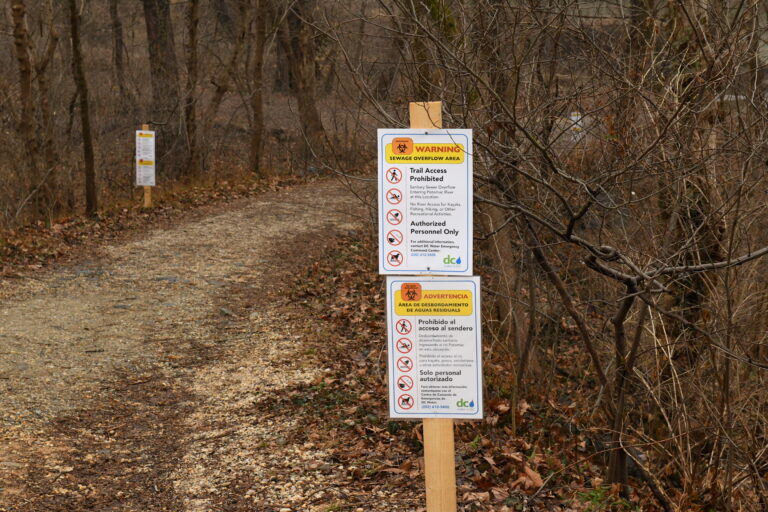
Photo Credit: Alan Lehman
Protecting the Potomac Means Having a Seat at the Table
Why Potomac Riverkeeper Network is intervening in the federal and state enforcement actions following the Potomac Interceptor disaster.
This River Belongs to All of Us
Over the first few days as the full scope of the Potomac Interceptor disaster came into focus, I kept coming back to the same thought: this wasn’t just a failure of infrastructure. It was a crisis for the river and for the millions of people whose lives are connected to it every day.
I thought about families whose weekend paddles and swims were suddenly overshadowed by uncertainty, anglers who have celebrated the Potomac’s remarkable recovery over the past several decades, communities that rely on the river for clean drinking water, and businesses whose livelihoods depend upon a healthy Potomac.
For generations, people across this watershed have worked tirelessly to transform the Potomac from a river once dismissed as a “national disgrace” into one that inspires pride and brings people together. Watching one of the largest sewage disasters in the river’s modern history threaten that hard-earned progress was heartbreaking. But as those first days unfolded, one thing became increasingly clear: we had a responsibility to act—not simply for the river itself, but for every community that depends upon it.
When the Disaster Happened, PRKN Showed Up
There was never any debate about what Potomac Riverkeeper Network would do next. We went to work.
Within days, our staff and Riverkeepers expanded emergency water quality monitoring, partnered with the University of Maryland on independent scientific sampling, met with public officials and drinking water providers, kept thousands of people informed, and became one of the only consistent independent sources of scientific information throughout the crisis.
One image from those early days has stayed with me. It was the middle of winter. Temperatures were well below freezing, and parts of the river and canal were covered with ice. Yet our team was out there before dawn, carrying sampling equipment through the cold because we knew communities needed reliable, independent information. In some locations, the ice was so thick that our staff literally had to use hammers to break through it before they could collect water samples. They never complained. They simply did what needed to be done because protecting this river—and the people who depend on it—is why they chose this work.
As our investigation continued, we documented ongoing contamination associated with the emergency bypass through the Chesapeake & Ohio Canal. That work brought additional government attention to pollution pathways that otherwise might have remained undiscovered and helped spur additional emergency cleanup and remediation efforts.
I could not be more proud of our staff, volunteers, scientific partners, and supporters. Their dedication reminded me that environmental protection is ultimately about people showing up for one another. When the Potomac needed advocates, they answered that call.
The People of the Potomac Deserve a Seat at the Table
Our decision to intervene is not about securing a seat at the table for Potomac Riverkeeper Network. It is about ensuring that the people of the Potomac have one.
We are participating on behalf of our members, supporters, and the communities that depend on this river every day—people who drink its water, live along its banks, paddle, fish, swim, boat, operate businesses, and earn their livelihoods from a healthy Potomac.
Government enforcement is indispensable, and I appreciate the United States and Maryland for bringing these important cases. But government agencies necessarily represent governmental interests. Congress recognized that the public also deserves an independent voice when shared natural resources are harmed. For more than fifty years, the Clean Water Act’s citizen suit provisions have empowered citizens and nonprofit organizations to stand alongside government, strengthen enforcement, and ensure that the interests of affected communities remain part of the conversation. Some of our nation’s most important environmental victories have been achieved because citizens had both the right and the responsibility to act. That is the tradition we are honored to continue.
Restoring Trust as Much as Restoring the River
Our goal has never been litigation for its own sake. Litigation is simply one tool to achieve what matters most: a fully restored Potomac River for the communities that depend upon it.
Success will not be measured by the size of a civil penalty. It will be measured by whether damaged habitats are restored, contaminated floodplains and sediments are addressed, critical infrastructure is repaired and modernized, scientific questions receive honest answers, and families once again feel completely confident swimming, fishing, paddling, and drawing drinking water from this remarkable river.
Perhaps the greatest damage caused by this disaster was the loss of public confidence. Rebuilding that trust will require transparency, independent science, meaningful restoration, and sustained accountability.
I am deeply grateful to our extraordinary pro bono legal teams at Earthjustice and Sidley Austin. Their commitment, expertise, and generosity have made it possible for the voices of Potomac communities to be heard in these proceedings. Their partnership reflects the very best of the legal profession in service of the public interest.
The Potomac has overcome extraordinary challenges before. We believe it can do so again. Our decision to intervene reflects our commitment to ensuring that this tragedy becomes a turning point for the river rather than simply another chapter in its history. Protecting the Potomac requires accountability, transparency, independent science, and a genuine commitment to restoration. Above all, it requires ensuring that the river and the communities who depend upon it continue to have a meaningful seat at the table.


Betsy Nicholas, President
Potomac Riverkeeper Network