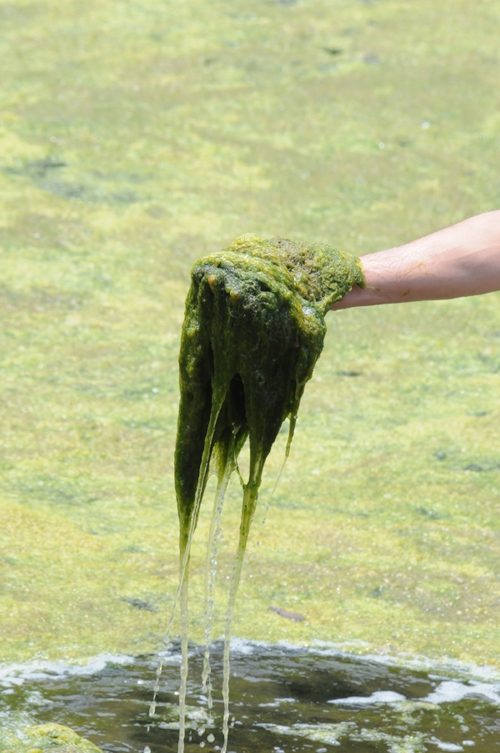
The Shenandoah River has been plagued by excessive algae outbreaks for some time now. This was brought to light in 2005 when a large-scale fish kill triggered an investigation by Virginia’s Fish Kill Task Force into the underlying issues. The Task Force discovered that pollution from large agricultural operations was creating a whole host of issues, such as intersex fish and fish afflicted with infections, lesions and heavy parasite loads. In addition to the physiological effects on the fish, the excess nutrients in the river were leading to uncontrolled algal growth.
Since these studies were done, more fish kills have been reported in the Shenandoah and excessive algae growth remains prevalent. These algal outbreaks are detrimental to aquatic life as well as recreation on the river such as fishing, paddling, tubing, and swimming. Despite extensive data demonstrating that widespread algae outbreaks prevent the river from meeting Virginia’s water quality standards, the Virginia Department of Environmental Quality has refused to list the river as impaired. Listing a waterway as “impaired” triggers a regulatory process leading to the imposition of limits on the amount of the pollution causing the impairment into the waterway. In this case, Virginia would be required to develop limits on the total amount of nitrogen and phosphorus being discharged into the Shenandoah that are protective enough to prevent algae outbreaks and improve water quality. The main source of these discharges is from agricultural runoff of poultry litter and cattle manure from already saturated fields..
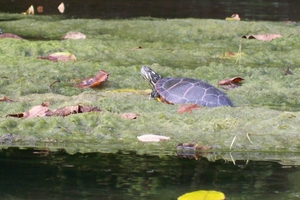
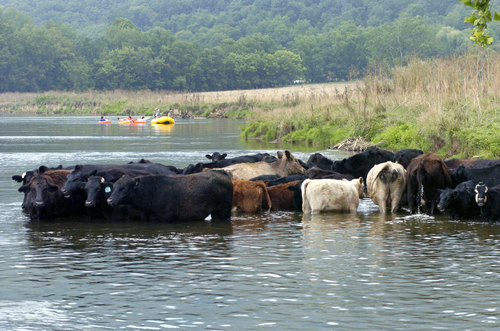
It is obvious that excessive algal growth is impairing the overall health of the Shenandoah River and the public’s ability to enjoy it. Not only that, but it is reducing the biodiversity in the river as many types of fish and benthic creatures need good subaquatic vegetation in order to survive. We are also witnessing the slow but steady rise of nitrates in groundwater, from which over half the population of the Shenandoah Valley draws its drinking water. The underlying causes need to be addressed, and that is one of the purposes of the Respect the Shenandoah Campaign. To reduce harmful algal outbreaks, we will advocate for limits on the amount of cattle manure and poultry litter that can be applied to farm fields and for stream fencing to keep cattle from defecating in the river.
The Respect the Shenandoah Campaign is built on the recognition that we are all responsible for protecting our rivers so that others may use and enjoy them. We all use and enjoy the river. Working together, we can all Respect the Shenandoah and protect it as well.
Our History
Potomac Riverkeeper, Inc. was founded in 2000 by a group of local community members who saw the need for stronger enforcement of federal, state, and local clean water protections in local rivers through grassroots advocacy and legal action. Riverkeepers are the eyes and ears of the rivers, the voice of the rivers, and the experts in the rivers, protecting the public’s rights to clean water. Encompassing the skills of scientists, teachers, law officers, fishermen, and paddlers, Riverkeepers combine a profound knowledge of their waterway, matched with a relentless commitment to protecting clean water and the rule of law.
Ed Merrifield was hired in 2003 as the first Potomac Riverkeeper and President of the Potomac Riverkeeper Network. In 2006, Jeff Kelble was hired as the Shenandoah Riverkeeper, and in 2010 Brent Walls joined the team as Upper Potomac Riverkeeper. Ed Merrifield led the foundation in its early stages to their first successes including filing the first enforcement actions against polluters and testifying before Congress on the intersex fish problem that was plaguing the Potomac River in 2006. Ed retired from being President at the end of 2012, and in 2014 Jeff transitioned to be President and Riverkeeper.
In 2015, Potomac Riverkeeper Network was formed when the organization hired two new Riverkeepers: Mark Frondorf, Shenandoah Riverkeeper, and Dean Naujoks, Potomac Riverkeeper as well as Phillip Musegaas, Vice President of Programs and Litigation, to oversee its expanding docket of legal actions. The resulting organization, PRKN, is the sole nonprofit combining assessment, advocacy, legal action, and community engagement to stop pollution in the Potomac and Shenandoah Rivers.
After several more years of growth and success defending clean water in the Potomac and Shenandoah Rivers and their tributaries, Jeff left Potomac Riverkeeper Network, and in 2018 Nancy Stoner, one of the nation’s most experienced water policy experts, joined the organization as the new president, and, along with the board of directors, has helped PRKN expand and deepen its reach throughout the watershed.